
What if there was a cheaper and healthier way to give your products a cocoa taste?

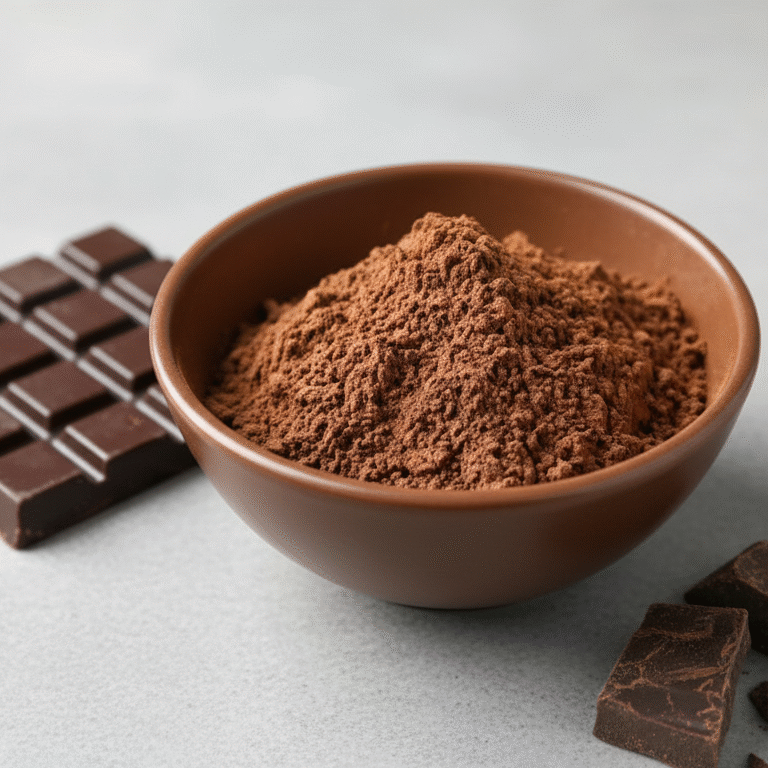
What is cocoa fiber?
Cocoa fiber is a natural dietary fiber.
• It has a strong cocoa aroma and color.
• It contains low amounts of fat (5%) and high amounts of fiber (60-65%).
• When used as a bulking agent, it can be used as a sugar substitute up to 45% in chocolate products.
• Cocoa fiber can also bind water and oil, and this property allows stabilizers and emulsifiers to be removed from the recipe.
Advantages of using
cocoa fiber?
• Provides a cost advantage as it has a lower price compared to cocoa.
• Prevents the release of fat that occurs during the shelf life of spreadable chocolate-like products due to temperature fluctuations.
• Since cocoa fiber has water and oil binding properties, it can eliminate the use of emulsifiers in some recipes.
• Due to its water-holding capacity, it can allow the reduction of thickener amounts in recipes for certain product groups.
• Provides an advantage in nutritional values in healthy eating products, as it has a higher fiber and protein content and lower fat content compared to cocoa.
How is a cocoa fiber
obtained?
• Cocoa fiber is a product obtained from roasted cocoa husks through cleaning, micronization, and sterilization.
• The process consists of physical operations and does not involve any chemical treatment, ensuring the product is 100% natural.
• The color, taste, and aroma properties of cocoa powder are preserved.
• Our product is imported from Poland and holds Organic, Halal, and Kosher certifications.
What if there was a
cheaper and healthier way to give your products a cocoa taste?
• In the bakery and confectionery industry, cocoa powder is an important ingredient.
• The price of cocoa powder is rapidly increasing worldwide. However, there is an alternative in many applications – cocoa fiber.
• Cocoa fiber can replace cocoa powder in any ratio, or up to 100% of the cocoa powder, depending on the color of the cocoa powder.
• According to trials, 20% of the darkest and most expensive cocoa powder can be replaced with cocoa fiber without any perceived sensory difference.
• The lighter the color of the cocoa powder, the higher the ratio can be. For natural cocoa powder, substitution up to 100% is possible.
Cocoa fiber as a
bulking agent
• The serious health risks caused by sugar consumption are recognized globally. The food and beverage industry has to grapple with concerns related to obesity and diabetes.
• The American Heart Association (AHA) recommends consuming less than 6 teaspoons (25 grams) of sugar per day for women and less than 9 teaspoons (38 grams) for men. AHA limits for children vary based on their age and caloric requirements but are between 3-6 teaspoons (12–25 grams) per day.
• When used as a bulking agent, cocoa fiber replaces up to 45% of the sugar in chocolate food and beverage products while maintaining the same sensory properties as the reference product. The food and beverage industry continues to work daily on solutions to reduce sugar levels in products to help reduce the risk of chronic diseases such as diabetes and obesity. Cocoa fiber is an excellent solution in this regard.
• Cocoa fiber can be used in cocoa coatings, “High-fiber” chocolate beverages, chocolate bases, extruded snacks, high-fiber spreadable chocolate cream, fitness bars, and other chocolate and low-fat products.
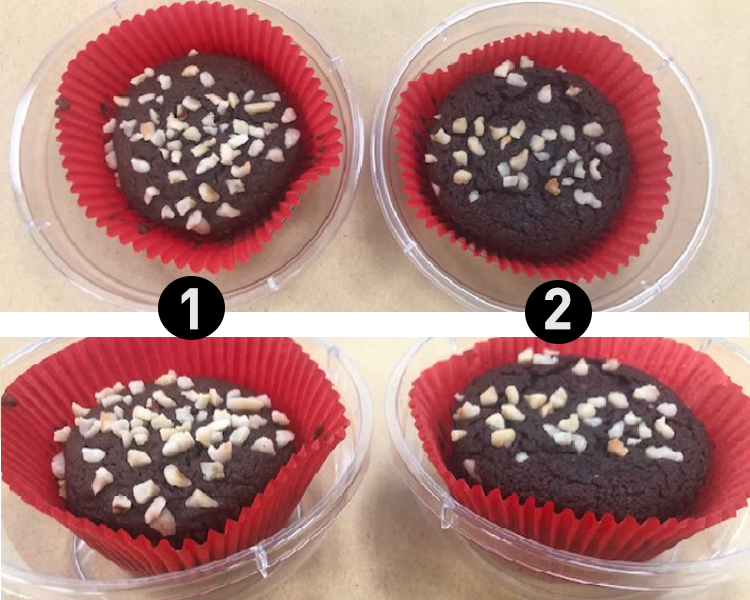
Muffin Application
Sample number 1 in the photograph was prepared with cocoa fiber, and sample number 2 was prepared with alkalized cocoa powder.
The results of the trial conducted using cocoa fiber versus alkalized cocoa are stated below. Cocoa was applied at 6.10% in the recipe.
• The color was found to be light. Cocoa fiber has a natural cocoa color. However, it was evaluated against alkalized cocoa to observe the maximum difference.
• The taste of the sample containing cocoa fiber was preferred more.
• The crumb color and structure were evaluated as better.
• Cocoa fiber provided better homogeneity and flowability.
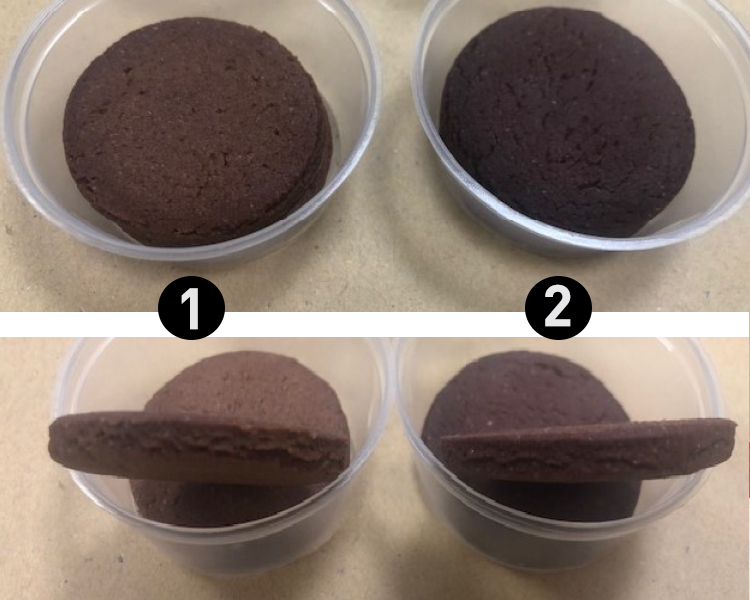
Biscuit Application
Sample number 1 in the photograph was prepared with cocoa fiber, and sample number 2 was prepared with alkalized cocoa powder.
• In the Cocoa Fiber sample, both the external appearance and the internal structure were evaluated as better. Cocoa was applied at 3.50% in the biscuit recipe.
• Taste and aroma were evaluated as similar.
• No off-taste was perceived.
• High fiber declaration is possible.
• When fiber and cocoa are used together, no significant difference related to color is perceived.